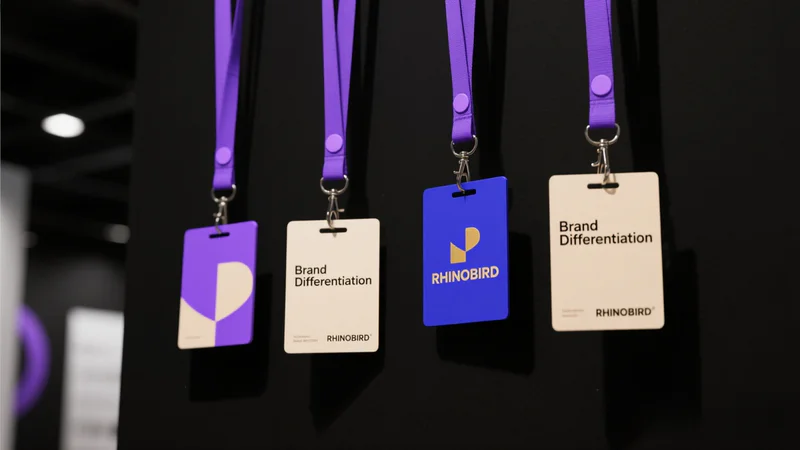
Many skincare brands look different on the surface but feel surprisingly similar underneath.
The label changes. The logo changes. The packaging color changes. But the product logic often stays the same.
That is one of the biggest hidden problems in basic private label.
For many new brands, the issue is not weak branding. It is that product differentiation was limited from the start.
Why basic private label often creates sameness
Basic private label models are built for one thing: velocity. They are designed to get a founder from "idea" to "inventory" in the shortest time possible. On the surface, this is incredibly appealing. You choose a formula from a pre-set library, pick a stock bottle, slap on a label, and you’re a brand owner.
However, this speed often comes at the cost of a narrow supply structure. Most traditional private label companies operate out of a single factory or a very restricted set of suppliers. This creates a "formula bottleneck":
The Shared Library: If a factory has 20 high-performing base formulas, and they serve 200 brands, the math is unavoidable. Dozens of brands are selling the exact same "Advanced C Serum" under different names.
Systemic Repetition: Because the formulas and packaging options come from the same underlying system, the "logic" of the products—the viscosity, the stability profile, the ingredient combinations—becomes repetitive.
When your brand is built on a narrow foundation, you aren't just buying inventory; you are buying into a system that was designed to make you look like everyone else.
Differentiation starts earlier than branding
Many founders assume differentiation happens at the design stage.
But by the time a brand is choosing label colors and packaging style, a large part of the product logic may already be fixed.
Real differentiation often starts earlier:
which product category the brand launches with
which formula direction it chooses
which texture, function, or ingredient story it builds around
which packaging format supports that positioning
how clearly the product fits the target customer
Branding matters. But branding alone cannot fully solve product sameness if the product foundation is already too generic.
Why a broader manufacturing base creates better product possibilities
This is where the limits of basic private label become more obvious.
If a brand only has access to a narrow set of factories and formulas, then the path to differentiation is naturally smaller. The choices may be fast, but they are also constrained.
A broader manufacturing network creates a better starting point.
Different manufacturers are strong in different categories. Some have deeper experience in serums. Some are stronger in creams. Some have more mature formulation systems for specific textures, ingredient combinations, or product functions.
That does not automatically guarantee uniqueness. But it gives a brand more room to build a product direction that is clearer, stronger, and less interchangeable.
RhinobirdBeauty is built to improve the starting point

At RhinobirdBeauty, the goal is not just to help brands launch quickly. It is to help them launch from a stronger foundation.
Instead of locking founders into a narrow private label structure, RhinobirdBeauty connects a broader beauty manufacturing network with formula selection, packaging options, online design, and order launching in one workflow.
That gives brands a better chance to build differentiation earlier, where it matters most.
Not just at the label stage.
Not just at the visual stage.
But at the product foundation stage.
Explore formulas and product options at RhinobirdBeauty
Better differentiation is not always more complexity
A common mistake is to assume that differentiation means making everything more custom, more complicated, or more expensive.
That is not always true.
Sometimes better differentiation simply means choosing a better starting point:
a stronger formula direction
a clearer packaging fit
a more relevant product concept
a launch path that is not trapped inside a narrow catalog
The goal is not endless customization. The goal is to avoid becoming interchangeable.
Conclusion
Basic private label makes launching easier, but it can also make products feel more alike than founders expect.
That is why brand differentiation should not begin only at the design layer. It should begin earlier, at the product foundation level.
The more limited the supply structure, the more limited the product logic usually becomes.
RhinobirdBeauty is built around a different idea: better differentiation starts earlier, with better formulas, broader product possibilities, stronger packaging fit, and a more connected launch workflow.
Build a skincare product with stronger differentiation
Key Takeaways
Many private label products look different on the surface but rely on very similar product logic underneath.
Product differentiation starts earlier than branding.
A narrow factory base usually creates a narrower product foundation.
Better differentiation does not always mean more complexity; it often means a better starting point.
RhinobirdBeauty helps brands build stronger differentiation through a broader manufacturing network and a connected launch workflow.