What Are Peptides?
Peptides are short chains of amino acids that serve as building blocks for proteins in the skin. Think of them as messengers that tell your skin cells what to do.
Your skin naturally contains peptides. They signal processes like collagen production, wound healing, and cellular repair. As you age, peptide levels decline. This is why skin loses firmness, elasticity, and the ability to recover from damage.
In skincare, synthetic and naturally derived peptides are added to products to supplement this decline. They communicate with skin cells to trigger specific responses: more collagen, better hydration, reduced inflammation, or faster repair.
For beauty brands, peptides represent one of the most versatile and scientifically credible ingredient categories. For consumers, they offer a gentler alternative to aggressive actives like retinol while still delivering measurable anti-aging results.
How Peptides Work in Skincare
Peptides function as cellular communicators. Here is what happens when they penetrate the skin:
Signal Collagen Production
Certain peptides send messages to fibroblasts, the cells that produce collagen. This increases collagen synthesis, leading to firmer, plumper skin over time.
Inhibit Muscle Contraction
Neuropeptides interfere with the signals that cause facial muscles to contract. This softens expression lines similar to how injectables work, but through topical application.
Support Skin Barrier
Some peptides strengthen the skin's natural barrier by promoting ceramide and lipid production. A stronger barrier retains moisture better and protects against environmental damage.
Reduce Inflammation
Anti-inflammatory peptides calm skin responses, making them suitable for sensitive and reactive skin types.
Enhance Repair
Copper peptides specifically support wound healing and tissue repair by activating the skin's natural regeneration processes.
Types of Peptides and What They Do
Not all peptides work the same way. Understanding the different types helps brands choose the right ones for their formulations.
Table
Signal peptides are the most common in anti-aging products. They tell skin to produce more collagen, addressing the root cause of wrinkles and sagging.
Copper peptides have gained cult status for their ability to support repair and regeneration. Brands like The Ordinary and Biossance have built entire product lines around copper peptide technology.
Neuropeptides offer a non-invasive approach to line reduction. While results are more subtle than injectables, they appeal to consumers who want prevention without needles.
Proven Benefits of Peptides
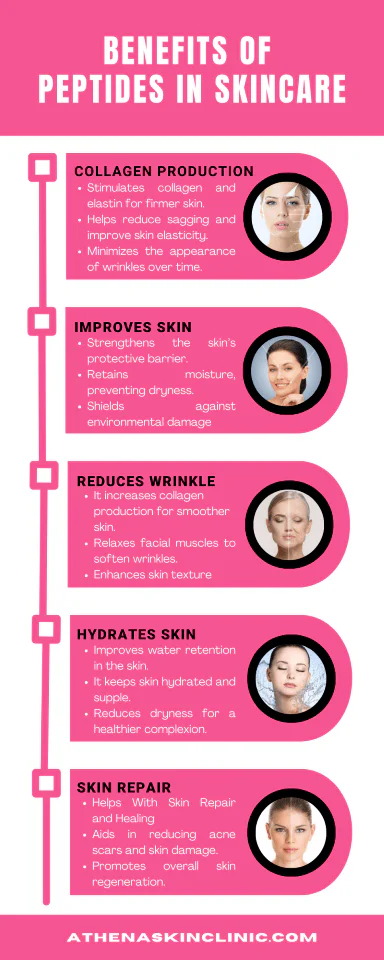
Table
The standout advantage of peptides is their gentleness. Unlike retinol, which can cause irritation, peeling, and sensitivity, peptides work with the skin's natural processes. This makes them suitable for all skin types, including sensitive and reactive skin.
Peptides also pair well with other actives. They do not conflict with vitamin C, acids, or retinol. In fact, combining peptides with other ingredients often produces better results than using them alone.
Formulating with Peptides: What Beauty Brands Need to Know


Peptides are relatively stable compared to other actives, but formulation still matters.
Concentration Guidelines
Table
Most consumer peptide products fall in the 0.05% to 0.5% range. Higher concentrations do not always mean better results. Peptide efficacy depends on penetration, stability, and the specific peptide type.
Formulation Compatibility
Peptides work well with:
Hyaluronic acid for enhanced hydration and delivery
Niacinamide for barrier support and brightening
Ceramides for barrier repair and moisture retention
Antioxidants like vitamin C and E for comprehensive protection
Peptides can be used alongside:
Retinol (peptides support barrier during retinol adjustment)
AHAs and BHAs (peptides aid repair after exfoliation)
Vitamin C (complementary collagen support)
Stability Considerations
Peptides are generally stable across a wide pH range (4.0 to 7.0)
Avoid extreme pH levels that could degrade peptide bonds
Water-based formulations are ideal for peptide delivery
Airless packaging extends shelf life by minimizing oxidation
The RhinoBird Approach: Our formulation library includes peptide serums and moisturizers at optimized concentrations with proven peptide combinations. Each formula is stability-tested to ensure peptides remain active throughout the product shelf life.
Copper Peptides: The Star Ingredient
Copper peptides deserve special attention. They have become one of the most sought-after ingredients in premium skincare.
What makes copper peptides special:
They combine a peptide with a copper ion for dual action
Copper supports wound healing and tissue repair
The peptide component signals collagen and elastin production
They possess antioxidant properties that protect against free radical damage
Popular copper peptide products:
The Ordinary "Buffet" + Copper Peptides 1%
Biossance Squalane + Copper Peptide Rapid Plumping Serum
NIOD Copper Amino Isolate Serum
For beauty brands: Copper peptides command premium pricing. Consumers associate them with advanced science and visible results. Including a copper peptide product in your line can elevate brand perception and average order value.
Positioning Peptide Products for Your Brand
Peptides fit multiple brand narratives. Consider these angles:
The Gentle Anti-Aging Brand
Position peptides as the retinol alternative for sensitive skin. Emphasize results without irritation. Soft, soothing aesthetics support this approach.
The Science-Forward Brand
Highlight clinical research, specific peptide types, and mechanism of action. Clean, clinical packaging with detailed ingredient information appeals to research-driven consumers.
The Multi-Active Brand
Showcase peptide combinations with other actives. Position your product as a comprehensive solution that addresses multiple concerns simultaneously.
The Preventive Care Brand
Target younger consumers who want to maintain collagen levels before visible aging appears. Peptides are ideal for this demographic because they are gentle enough for early use.
Consumer Education: What Buyers Need to Know
For brands selling peptides, clear education builds trust and reduces returns.
Set Realistic Expectations
Peptides are not instant. Results develop over 8-12 weeks of consistent use. Communicate this timeline clearly.
Explain the Science Simply
"Peptides are messenger molecules that tell your skin to produce more collagen and elastin. Think of them as instructions that help your skin rebuild itself."
Address the Retinol Comparison
Many consumers wonder whether they need peptides if they already use retinol. Explain that peptides complement retinol by supporting the skin barrier and adding collagen signaling through a different pathway.
Usage Guidance
Apply to clean, dry skin
Use morning and night for best results
Layer under moisturizer and SPF
Peptides are safe for long-term daily use
Regulatory Considerations for Peptide Products
Peptides are generally well-accepted in cosmetic regulations, but nuances exist.
United States (FDA):
Peptides are cosmetic ingredients, not drugs, at typical concentrations
Avoid drug claims ("stimulates collagen production" is acceptable; "treats wrinkles" may trigger scrutiny)
MoCRA facility registration and product listing apply
European Union:
Most peptides are permitted in cosmetic products
New peptides may require safety assessments under EU regulations
Claims must remain cosmetic, not physiological or medical
Other Markets:
Korea and Japan have extensive peptide use in cosmetics
China has specific requirements for peptide sourcing and documentation
Australia requires ingredient disclosure but generally permits peptides
The RhinoBird Solution: Our smart compliance screening evaluates your peptide product against regulations in your target markets. We verify concentration limits, claim boundaries, and documentation requirements automatically.
Conclusion: Peptides Are a Brand Foundation Ingredient
Peptides occupy a unique position in skincare. They are scientifically credible, clinically supported, gentle enough for daily use, and versatile enough to fit almost any brand positioning.
For beauty brands, peptides offer a low-risk, high-reward ingredient category. They appeal to consumers who want anti-aging results without the irritation of stronger actives. They pair well with other ingredients. They support premium pricing.
The brands that succeed with peptides will be those that educate clearly, formulate thoughtfully, and position authentically. Peptides are not a trend. They are a category staple that will continue growing as consumers prioritize skin health and gentle efficacy.
Whether you are launching your first anti-aging serum or expanding an established line, peptides deserve a place in your product roadmap.
Ready to launch a peptide product with confidence? RhinoBird provides access to stable, effective peptide formulations at optimized concentrations. Our smart compliance screening ensures your product meets regulations in every target market. Start with a Launch Kit to validate your peptide concept before scaling.
Frequently Asked Questions
Q: Are peptides better than retinol?
A: They serve different purposes. Retinol accelerates cell turnover more aggressively. Peptides support collagen production more gently. Many consumers use both: retinol at night for renewal, peptides in the morning for support. Peptides are ideal for those who cannot tolerate retinol.
Q: How long until I see results from peptides?
A: Most users notice improved hydration and texture within 2-4 weeks. Firmness and line reduction typically appear after 8-12 weeks of consistent use. Peptides reward patience.
Q: Can I use peptides with vitamin C?
A: Yes. Peptides and vitamin C complement each other. Vitamin C provides antioxidant protection and supports collagen synthesis. Peptides add collagen signaling through a different mechanism. Use vitamin C in the morning and peptides morning and night.
Q: What concentration should my brand start with?
A: 0.1% to 0.5% is ideal for most consumer products. This range delivers visible results while remaining gentle enough for daily use across skin types. Reserve higher concentrations for treatment-focused lines.
Q: Are peptides vegan?
A: Most synthetic peptides are vegan. Some naturally derived peptides may come from animal sources. Check with your supplier and communicate clearly with consumers who prioritize vegan products.
Q: Do peptides actually penetrate the skin?
A: This is a common concern. Smaller peptide chains (2-6 amino acids) penetrate the stratum corneum effectively. Formulation technology like encapsulation and liposomal delivery enhances penetration further. Choose proven peptides with research supporting their bioavailability.
About RhinoBird
RhinoBird is the one-stop cosmetics development platform helping beauty brands launch with confidence. Our peptide formulations, smart compliance screening, and transparent pricing ensure your peptide products meet the highest standards from day one.