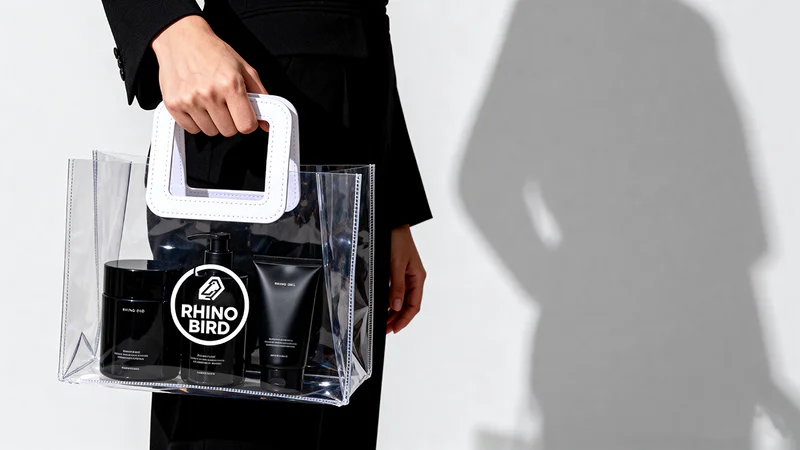
Many skincare brands start to feel generic before they even launch.
The problem usually does not begin at the logo stage. It begins much earlier — with product choices that are too interchangeable, positioning that is too vague, and launch decisions that are made from convenience instead of clarity.
That is why building a skincare brand that does not feel generic is not just a design challenge.
It is a product challenge, a positioning challenge, and a launch challenge.
Generic brands often start with generic product logic

A brand can have polished packaging, a clean website, and attractive visual design — and still feel forgettable.
That usually happens when the product logic underneath is weak.
If the product category is too common, the formula direction is too interchangeable, and the positioning sounds like everyone else, the brand will feel generic no matter how refined the surface looks.
This is one reason so many early skincare brands end up blending into the same visual and product language. They are built from choices that were easy to source, easy to copy, or easy to explain — but not strong enough to create real distinction.
A stronger brand starts with a stronger reason for the product to exist.
Differentiation starts before branding
Many founders think differentiation begins when the visual identity begins.
In reality, differentiation often starts earlier:
which product is chosen as the first SKU
which formula direction supports the brand idea
which packaging format reinforces that position
which customer problem the product solves clearly
which claims the brand avoids instead of repeating
That means branding is not the first layer of distinction. It is the expression of choices that were already made earlier.
If the earlier decisions are too generic, branding has less to work with.
If the earlier decisions are sharper, branding becomes easier and more believable.
Strong brands are easier to understand

A brand does not become distinctive by being complicated.
It becomes distinctive by being clear.
For a new skincare brand, clarity matters more than novelty for its own sake. Customers should be able to understand what kind of product the brand makes, who it is for, and why it deserves attention.
That usually happens when a brand launches with:
one clear product direction
one believable customer need
one product story that is easy to understand
one packaging choice that reinforces the product logic
The more clearly a brand can explain itself, the less generic it feels.
Generic brands often try to say too much at once
Another reason new brands feel generic is that they try to cover too many directions too early.
They launch too many products.
They make too many claims.
They try to sound premium, clinical, natural, innovative, and trend-led all at once.
The result is usually not richness. It is blur.
A stronger early brand is often more focused.
It knows what role the first product plays.
It knows what the product is meant to communicate.
And it avoids unnecessary complexity that weakens the brand story.
A narrower launch often creates a clearer identity.
Packaging is part of brand meaning, not just brand appearance
Packaging plays a major role in whether a skincare brand feels generic or specific.
It is not just a container. It tells the customer how to interpret the product before they use it.
A dropper bottle may suggest treatment and precision.
An airless pump may suggest performance and hygiene.
A soft tube may suggest routine use and accessibility.
That is why packaging should not be treated as a decorative layer added at the end. It should reinforce the product type, the formula direction, and the customer experience the brand wants to create.
At RhinobirdBeauty, packaging is treated as part of a connected system. Formula and packaging options shown on the platform are matched and tested in advance, so founders are not just picking what looks good. They are choosing from packaging options that already fit the formulas more reliably.
That helps the brand feel more coherent from the start.
CTA: Explore formulas, packaging, and product options at RhinobirdBeauty
Better first products create better brands
A strong skincare brand does not need to launch with a perfect product line.
It needs to launch with a first product that teaches the market what the brand means.
That first product should not be the most overloaded, over-customized, or trend-chasing option. It should be the product that makes the brand easiest to understand and easiest to remember.
This is why first-product selection matters so much.
The first SKU often becomes the customer’s first mental shortcut for the entire brand. If that product feels too vague or too familiar, the brand feels weaker. If that product feels clear and well positioned, the brand feels stronger.
Testing helps reduce generic decisions
Founders often make generic decisions when they are moving too fast without enough feedback.
They choose products by assumption.
They choose packaging by visuals alone.
They commit too early to directions that have not been properly tested.
Testing helps reduce that.
At RhinobirdBeauty, launch kits give founders a practical way to explore product directions before moving into a larger order. That means first-product decisions do not have to come entirely from theory. Founders can test, compare, and narrow the brand’s starting point before committing more heavily.
That creates a better path to differentiation, because the brand is built from clearer decisions instead of generic defaults.
RhinobirdBeauty helps brands start with stronger differentiation
RhinobirdBeauty is not just built to help founders launch products faster. It is built to help them launch from a stronger starting point.
That means:
access to more mature product foundations
packaging options matched and tested with formulas
a workflow that connects product choice, packaging, design, and launch
launch kits that reduce guesswork before larger commitments
All of that helps founders avoid one of the most common early brand problems: building a product that looks finished but still feels generic.
A stronger brand starts earlier than design. It starts with better product logic.
CTA: Start building a skincare brand with stronger product logic
Conclusion
A skincare brand does not feel generic because the design is too simple.
It usually feels generic because the product logic is too interchangeable, the positioning is too broad, and the launch choices are too disconnected.
That is why stronger brands begin earlier.
They begin with clearer product direction, tighter positioning, tested packaging fit, and launch decisions that help the brand become easier to understand from the start.
At RhinobirdBeauty, that is exactly what the platform is built to support.
Because a distinctive skincare brand is not created by surface polish alone.
It is built by better choices underneath.
Build a skincare brand that feels clearer, stronger, and less generic with RhinobirdBeauty
Key Takeaways
Skincare brands often feel generic because the product logic is weak long before the visual identity is finished.
Differentiation starts earlier than branding.
A strong first product helps customers understand what the brand means.
Packaging shapes brand meaning, not just appearance.
Launch kits and tested packaging-fit workflows help founders make clearer, less generic launch decisions.
RhinobirdBeauty helps brands build stronger differentiation through better product logic, packaging fit, and connected launch workflows.